
Written By: Stephanie Rojas | November 08, 2026
Time to Read 12 Minutes
An over-budget flip usually leaves the investor responsible for the added costs. If you’re asking what happens if a flip goes over budget in Houston, the borrower generally has to cover the gap, and the lender may pause or adjust remaining renovation draws while reviewing the project. Rising costs don’t automatically increase the approved budget.
That can strain cash flow and delay the renovation, especially when unexpected repairs, permit delays, or material costs affect the schedule. First, identify who is responsible for each cost, what funding options may bridge the gap, and how to keep the project moving without compounding the problem.
This guide explains how lender decisions and borrower responsibilities typically work, what to do when funding falls short, and how to reduce the risk of a budget overrun on a Houston flip.
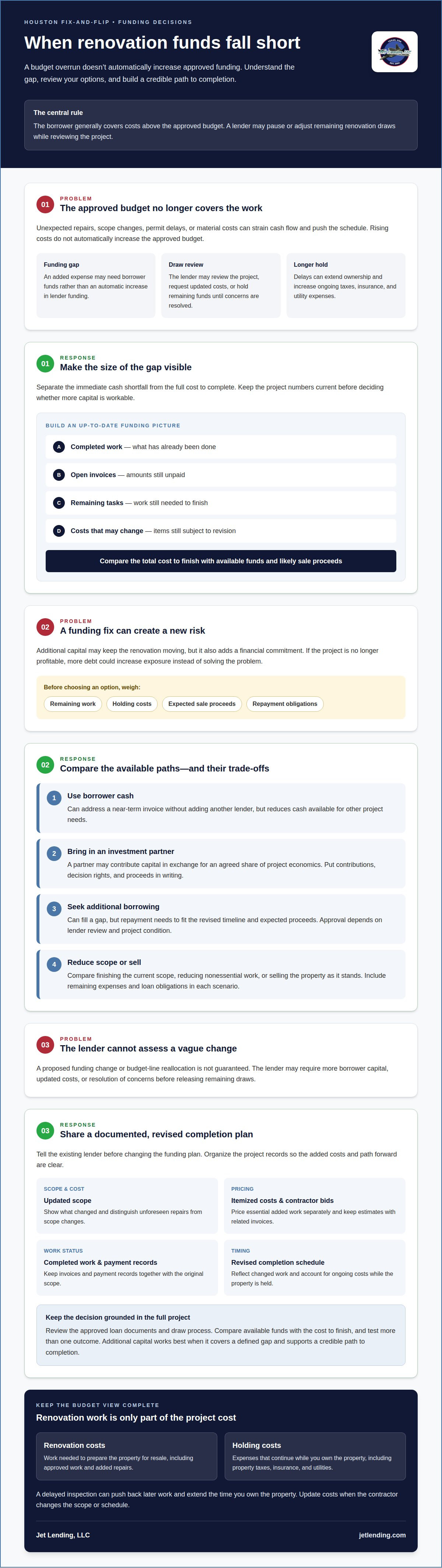
Additional capital can keep a Houston flip moving when renovation funds fall short, but it also adds a financial commitment. Separate the immediate cash gap from the full cost to complete the project. A revised scope, contractor bids, completed work, and remaining draw schedule help show whether new funding can support completion or merely postpone a larger shortfall.
If a Houston flip is no longer profitable, reassess the scope, contribute available cash, bring in an investment partner, seek additional borrowing, or consider selling before the renovation is complete. Compare each option with the remaining work, holding costs, expected sale proceeds, and repayment obligations.
Can Houston house flippers get renovation or construction financing after a budget overrun? They may seek additional financing, but approval depends on the lender’s review and the project’s condition. The lender may require more borrower capital before releasing remaining draws, request updated costs, or hold funds until concerns are resolved.
Before adding capital, build an up-to-date funding picture. List completed work, unpaid invoices, remaining tasks, and costs that could still change. Compare the total cost to finish with available funds and the likely sale outcome. For example, if a revised contractor bid identifies essential repairs missing from the original scope, price those repairs separately before deciding whether additional borrowing is workable.
Tell the existing lender before changing the funding plan. Send an updated scope, itemized costs, contractor bids, and a revised completion schedule. A lender may consider moving funds between budget line items if the project scope supports the change. Approval isn’t guaranteed, so don’t count a proposed reallocation as available cash.
Test more than one outcome: finish the current scope, reduce nonessential work, or sell the property as it stands. Include remaining project expenses and loan obligations in each comparison. If every completion scenario weakens the expected return, more debt may increase your exposure rather than rescue the investment. Additional capital works best when it covers a defined gap and supports a credible path to completion.
When project expenses exceed the approved budget, the borrower is generally responsible for the added costs. The overrun can affect cash flow, the completion plan, and the flip’s final return.
Costs above the approved budget are expenses beyond the amount approved for the project’s work. The borrower generally covers the gap rather than assuming the lender will automatically increase funding. For example, if demolition reveals electrical repairs missing from the approved scope, the added work may require borrower funds. Track each extra expense against the original budget to see how much cash is still needed.
The approved budget also guides draw planning. An overrun can leave an invoice unpaid while the borrower and lender review the project. Keep the original scope, new bids, invoices, and payment records together. This makes it easier to distinguish an unforeseen repair from a scope change and explain why costs increased.
A Houston flip’s total cost includes renovation work and expenses that continue while the property is held. There is no single typical total: purchase terms, repair scope, project duration, and financing terms all affect the calculation. Even a smaller renovation can incur substantial ongoing expenses if it takes longer than planned.
Renovation costs cover the work needed to prepare a property for resale. Holding costs continue during ownership and construction. To assess the full budget, group both categories instead of focusing only on contractor bids. For example, a delayed inspection can push back later work and extend the time you own the property.
Separate the budget into completed work, open invoices, remaining renovation tasks, and ongoing obligations. Update those figures when the contractor changes the scope or schedule. Then compare available funds with the cost to finish. This shows whether the overrun is limited to one task or affects the entire project plan.
Review the approved loan documents and budget before assuming a cost is covered. These documents describe the agreed funding and draw process; an added expense does not change those terms by itself. If a cost is disputed, keep the contractor’s estimate and related invoice with the project records. Clear documentation helps distinguish approved work from new expenses.
For example, imagine a project with a fixed repair scope and an unexpected plumbing issue. Record the new work separately, update the remaining-cost estimate, and assess the effect on the completion schedule. This gives you a clearer basis for deciding whether to reduce other work, add available capital, or revise the exit plan.
Several risks can push a Houston flip beyond its planned budget. Hidden conditions, schedule changes, and more costly work can compound one another.
Property taxes, insurance, and utilities are holding costs, the expenses that continue while you own the property. A longer renovation can mean more time paying those bills before a sale. For a Houston flip, include these carrying costs in the project forecast and update it when work or inspections extend the schedule.
These expenses affect profit by reducing the amount left after the property sells and project obligations are paid. Their actual impact depends on the property, coverage, usage, and length of ownership. Separate recurring bills from renovation invoices in the project records. That distinction helps show whether a budget gap comes from added construction work, a longer hold, or both.
Delays extend the time a property remains under renovation or awaits resale, increasing holding costs. Added time can narrow the margin between total project costs and sale proceeds. For example, a permit or inspection delay may push back later work while insurance, utilities, and property taxes continue.
How do Houston building permits and inspections affect renovation costs and timelines? Delays in permitting or inspections can extend the schedule and contribute to overruns. If one stage is waiting for approval or inspection, scheduled trades may need to return later while the project continues to incur holding costs.
Other causes start inside the property. Demolition can reveal hidden structural, plumbing, or electrical problems that weren’t visible during initial planning. The added work may change the sequence of repairs. Underestimated labor or a complex scope can also make the contractor’s original plan insufficient. Compare the written scope with actual site conditions as work progresses.
Costs and execution can shift, too. Material price increases may raise the cost of work not yet purchased. Contractor performance problems can delay tasks or require changes to the plan. A design or scope change can add labor, materials, and coordination needs. Track each change separately to make its effect on the remaining budget visible.
Weather and supply disruptions can interrupt planned work or delay materials. When one task depends on a late delivery, later work may also shift. In Houston, a longer schedule can extend property taxes, insurance, and utility expenses alongside renovation costs.
How do property taxes, insurance, and utilities add to flip holding costs? They continue as ownership expenses while the project takes longer, increasing total costs before resale. How do delays and extra holding costs affect a Houston house flip’s profit? They reduce the remaining margin by increasing costs without automatically increasing sale proceeds. Track the schedule alongside the cost forecast to see their combined effect.
Tell your lender when a Houston flip’s costs or timeline change. Early, specific updates give the lender a clearer basis for reviewing the project and its remaining funding.
Contact your lender when a new cost affects the approved scope or draw plan. For example, if demolition uncovers structural damage, share the contractor’s findings and revised estimate. Waiting until an invoice is overdue leaves less time to discuss the funding gap. Explain what changed, why the work is needed, and how it affects completion.
Prepare a current project summary before sending the update. Include the original scope, completed work, open invoices, remaining tasks, revised costs, and expected timeline. Attach contractor bids or other supporting documents. This gives the lender a practical view of the project, rather than a single unexplained request for more money.
When a project has budget problems, a lender may request an updated scope of work and cost breakdown. The lender may also adjust the draw schedule or hold funds until concerns are resolved. If the project appears distressed, the lender may decline to release further renovation funds. A clear, organized update helps address the information the lender needs to assess.
Ask whether the lender will consider reallocating funds between budget line items. Some lenders may allow it when the overall project scope supports the change, but approval isn’t guaranteed. For example, a lower-than-expected cost in one approved category might leave funds available for a necessary repair elsewhere. Provide the updated scope and cost breakdown so the request can be assessed against the project plan.
Keep written records of lender discussions, submitted estimates, and draw decisions. If a contractor changes a bid, send the revised document with a brief explanation. If a draw is held, ask which project concerns remain unresolved and what information could address them. Clear follow-up keeps the next discussion focused on specific items, such as missing cost details or a revised completion schedule.
Tie each update to a decision. If the lender approves a revised draw plan, use that version to track payments. If funds remain on hold, update the project’s cash-flow forecast before committing to additional work. A dated scope, itemized costs, and current schedule help the borrower, contractor, and lender work from the same project information.
Inspections and a realistic contingency plan help Houston investors spot budget risks before work begins. They can’t prevent every surprise, but they make the project scope and available funding easier to assess.
Arrange a thorough inspection before finalizing the renovation scope. Ask for findings on visible structural conditions, plumbing, electrical systems, and other areas relevant to the planned work. For example, a plumbing concern identified before demolition can be included in the initial scope instead of appearing later as an unexpected change. Use inspection findings to inform contractor bids and the project budget.
Turn each finding into a clear decision: does it need repair, further evaluation, or no work within the planned scope? Then make sure the written scope describes the agreed work. A vague item such as “update plumbing” gives less clarity than a description of specific tasks. Clear details help investors compare bids and identify when a new estimate changes the plan.
A contingency is money set aside for costs not captured in the original estimate. Set the reserve based on the property’s condition, inspection findings, scope uncertainty, and available funds. No single figure fits every Houston flip. Keep contingency funds separate from amounts assigned to known work, and record when an unexpected expense draws on the reserve.
Choose experienced contractors and request clear bids tied to the written scope. A useful bid identifies the work, materials, and assumptions behind the estimate. Compare proposals against the same tasks instead of choosing based only on the total. If one bid excludes a repair identified during inspection, its lower figure may not represent the full project cost.
Build a schedule around the work and its dependencies. Avoid a timeline so aggressive that it leaves little room for inspection findings, material delays, or contractor sequencing. For example, don’t schedule finish work before underlying repairs are complete. A practical sequence keeps decisions visible and makes it easier to connect schedule changes to added costs.
Review the budget as the project moves from inspection to bids and construction. Update the forecast when a contractor identifies a changed condition, revised material need, or scope adjustment. Record the reason, revised estimate, and affected task together. This creates a useful comparison between the original plan and current costs, rather than relying on memory when a decision is needed.
Use an investment property calculator to assess the deal’s numbers alongside your inspection findings and project assumptions.
Jet Lending, LLC helps real estate investors assess funding needs and evaluate a flip’s numbers. Its Investment Property Calculator supports deal analysis, and Short-Term Loans provide an asset-backed financing option for investment projects. If an overrun changes your funding plan, use your updated scope, remaining costs, and timeline to guide the conversation.
These tools can help you assess whether a project still fits your investment plan. They don’t replace a careful review of costs, loan terms, and expected sale proceeds. Contact Jet Lending, LLC to discuss your investment project and next steps.
If you’re asking what happens when a flip goes over budget in Houston, base your next decision on the project’s current numbers, not its original assumptions. Reassess whether the remaining work and available funding support your intended exit. If not, consider whether changing the scope or strategy would better protect your position.
Use the same discipline before your next purchase. Include inspection findings, contractor estimates, and realistic timing in your deal analysis. A clear plan can’t remove every uncertainty, but it can help you spot pressure points sooner and make more considered decisions.
Every flip has its own challenges. Learn from each decision and move forward with a plan you understand.
The borrower generally pays costs that exceed the approved project budget. A lender may also pause or adjust remaining renovation draws while reviewing the updated scope and costs. For example, if a newly discovered repair changes the work plan, the investor may need to revise the project forecast before deciding how to proceed. The loan documents and the lender’s draw process guide what happens to funding already allocated.
An overrun can reduce the investor’s proceeds after sale because the project has incurred additional expenses. The borrower may need to contribute personal funds, seek additional capital, or adjust the renovation plan. If extra work also delays listing, both the added construction expense and longer ownership period can affect the final margin. Recalculate the expected result using revised costs and timing, not the original estimate.
Common causes include concealed structural, plumbing, or electrical problems discovered after demolition; increased material prices; underestimated labor; and a more complex scope than planned. Permit or inspection delays, contractor performance issues, requested changes, weather, and supply disruptions can also add costs or time. For example, a delayed material delivery may disrupt scheduled work, leave later tasks waiting, and extend the project timeline.
Flood exposure, drainage conditions, or foundation concerns may reveal work beyond a Houston property’s planned renovation scope. Potential costs depend on the property’s condition and the repairs needed, so don’t assume every home has the same risks. Include relevant findings in the project evaluation before finalizing the work plan. If demolition exposes a foundation concern, get a clear assessment of the affected work before revising costs.
No single contingency amount suits every flip. Set a reserve based on inspection findings, uncertainty in the scope, contractor estimates, and funds available for unexpected work. A property with unresolved repair questions needs a different plan from one with a clearly defined scope. Keep contingency funds separate from money assigned to known tasks, and record each use so the remaining reserve stays visible.
If you’re asking what happens when a Houston flip goes over budget and cash runs short, work may stall while you reassess the funding and scope. A lender may require additional borrower capital before releasing remaining draws or hold funds while reviewing project concerns. Consider available cash, additional borrowing, a partner contribution, a reduced scope, or selling before completion. Compare each option with remaining obligations and the revised project outlook.
Start with thorough inspections before setting the renovation scope, then base contractor bids on the same written work plan. Choose experienced contractors, clarify assumptions and exclusions, and avoid timelines with no room for disruptions. Track changes against the original plan as work proceeds. For example, if a bid excludes an identified repair, account for that gap before treating it as the full project cost.
Tags:

More flips do not automatically mean more profit. The practical answer to how to scale a house flipping business in Houston is to grow only as fast as your deal analysis, financing, contractor...

A Houston flip can spend no more than $700,000 in total under the 70% rule when its after-repair value is $1 million. If repairs are budgeted at $50,000, that puts the purchase price at no more than...

What if the financing that gets you the keys leaves too little cash to finish the renovation? Learning how to finance a house flip in Houston means looking beyond the purchase price. Rehab costs,...